

Circle Singing: what it is and how to create music with other voices
What is Circle Singing?
Imagine someone singing a phrase of just three notes. Several people repeat it. Another voice joins in, playing a bass line. Someone adds rhythm with their mouth. Another person finds a harmony, and little by little, what was silence just seconds ago begins to transform into music.
Unlike a pre-prepared choral performance, here the composition happens as we sing. Each participant can hold a small part of the whole until many simple ideas begin to behave as a single musical organism.
You don't need to arrive with a song memorized, read sheet music, or know music theory. The material can come from a syllable, a breath, a word, two notes, a rhythm, or even silence.
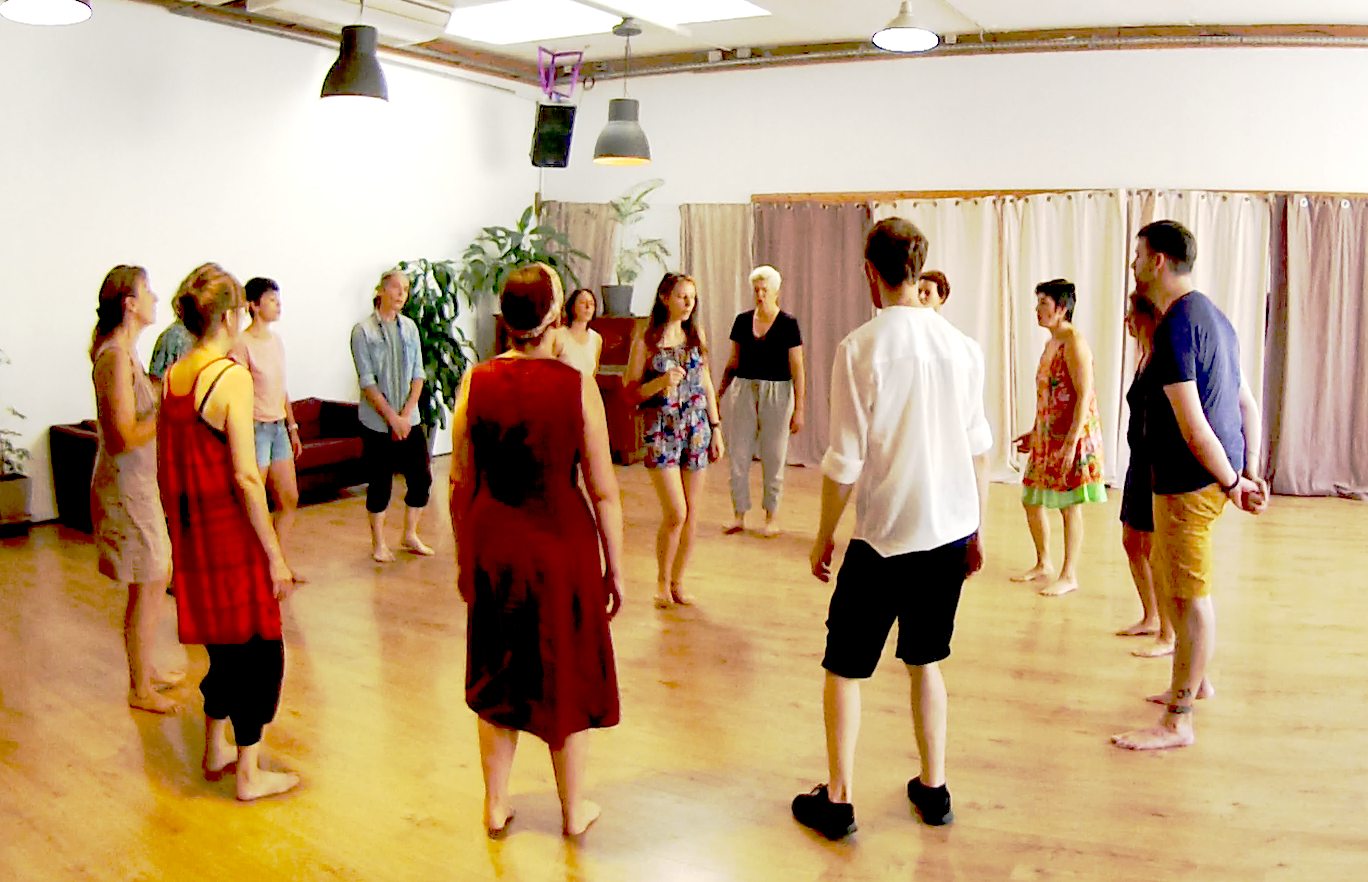
The contemporary term circle singing It is often associated especially with the vocal work of Bobby McFerrin, who developed his own style over decades. Circlesongs and helped popularize this language of choral improvisation. However, singing collectively, using call and response, repeating patterns, and constructing music in a participatory way appears in multiple musical and cultural contexts.
That's why it's more interesting to understand Circle Singing as a contemporary way of organizing collective vocal play,connected to a much broader territory of community singing, improvisation, and oral learning. Projects such as Make Music Day They present it precisely as an experience of spontaneous creation where harmonies, rhythms and melodies appear without prior preparation.
How a voice wheel works
A session can take many forms. Some are clearly guided by a facilitator; others distribute the initiative among the entire group. To understand its logic, we can start with a very simple version.
In a facilitated circle, one person can divide the circle into small sections and give each one a different pattern. Then they listen to the complete result: they might lower a layer, stop another, modify a rhythm, or open up space for someone to improvise.
Things get interesting when we stop thinking only about “What am I singing?” and we started to listen What does the music we are all building together need?.
The magic isn't in singing "perfectly"“
Circle Singing works especially well when the group develops a less spectacular, but much more powerful skill: listening.

Singing more rarely creates more interesting music. A tiny phrase can be extraordinary when it finds the right place within the whole.
One of the first skills that appears is learning to repeat without abandoning listening. While your voice maintains a steady tone, your attention remains open to the pulse, the collective breathing, and the other layers.
We also learn to give space. Perhaps the best contribution for a few seconds is simply to keep listening.
And when someone enters prematurely, accidentally changes a note, or loses the pattern, the event can become new material. Repeating an accidental variation can transform it into a musical idea. Listening to it allows us to decide whether we want to keep it, modify it, or let it go.
A song without sheet music that does have rules
Improvising freely doesn't mean everything happens randomly. A piece can rely on a few very clear musical elements.
| Element | Function | Simple example |
|---|---|---|
| Pulse | It provides a common time reference. | Gently tap four pulses with your body. |
| Ostinato | Create a recognizable shape through repetition. | Sing “dum — da-da — dum” over and over again. |
| Harmony | It adds depth by combining different heights. | One group holds a note while another sings a phrase. |
| Texture | It changes the character of the collective sound. | Whispers, long vowels, consonants, air or vocal percussion. |
| Signal of change | It allows you to transform the piece without stopping it. | One gesture indicates repeat, lower volume, change, or end. |
| Silence | It creates contrast, breathing room, and anticipation. | The entire circle leaves one or more pulses completely empty. |
With these few ingredients, there is already enough vocabulary to construct a piece. Harmonic and rhythmic knowledge can greatly expand the possibilities, but the starting point remains accessible: listen, repeat, and respond.
The circle as an instrument
When several layers appear simultaneously, something curious happens: we stop hearing just a group of people singing and begin to perceive a collective instrument.

Some voices can take charge of the rhythmic drive. Others build the bass line. A small group sustains chords or long notes. Someone can create ambient sounds, and another voice can move freely over that entire soundscape.
The role of the facilitator consists primarily of take care of the architecture of listening: to perceive when an idea needs time, when the texture is too full, when a section can change, and when it is appropriate to let the group find its own way.
There are also vocal improvisation formats where voice leading is distributed or disappears completely. Eeva Siljamäki's research on collaborative vocal improvisation in choral contexts It precisely demonstrates the value of co-construction, play, and shared musical interaction, even among participants with very different musical experiences.
From this perspective, facilitating means less “directing a project” and more to create conditions for collective music to emerge.
How to try Circle Singing in 10 minutes
You only need between 3 and 8 people, A place where they can be heard, and ten minutes. No instruments are needed.
Form a circle and mark a comfortable pulse with your knees, feet, or a small body movement.
One person invents a phrase of two to five sounds. Everyone repeats it until they begin to feel stable.
One part of the circle keeps the first phrase and another part invents something much simpler: a low note, a long vowel or a rhythmic response.
Add soft clapping, consonants, percussive sounds, breaths, or a third phrase. Avoid filling every space.
Anyone can improvise a melody while the others maintain the structure. The solo is always optional.
Peel back the layers one by one until only one voice remains. Then let the silence come.
Why does it feel so alive?
Because the song doesn't exist yet.
Every second contains a small question: Will it stay the same? Will another voice appear? Will the rhythm change? Will someone respond to that melody?
This uncertainty keeps the focus on the present. The same phrase, repeated for a minute, can completely change its meaning when a new harmony emerges beneath it.
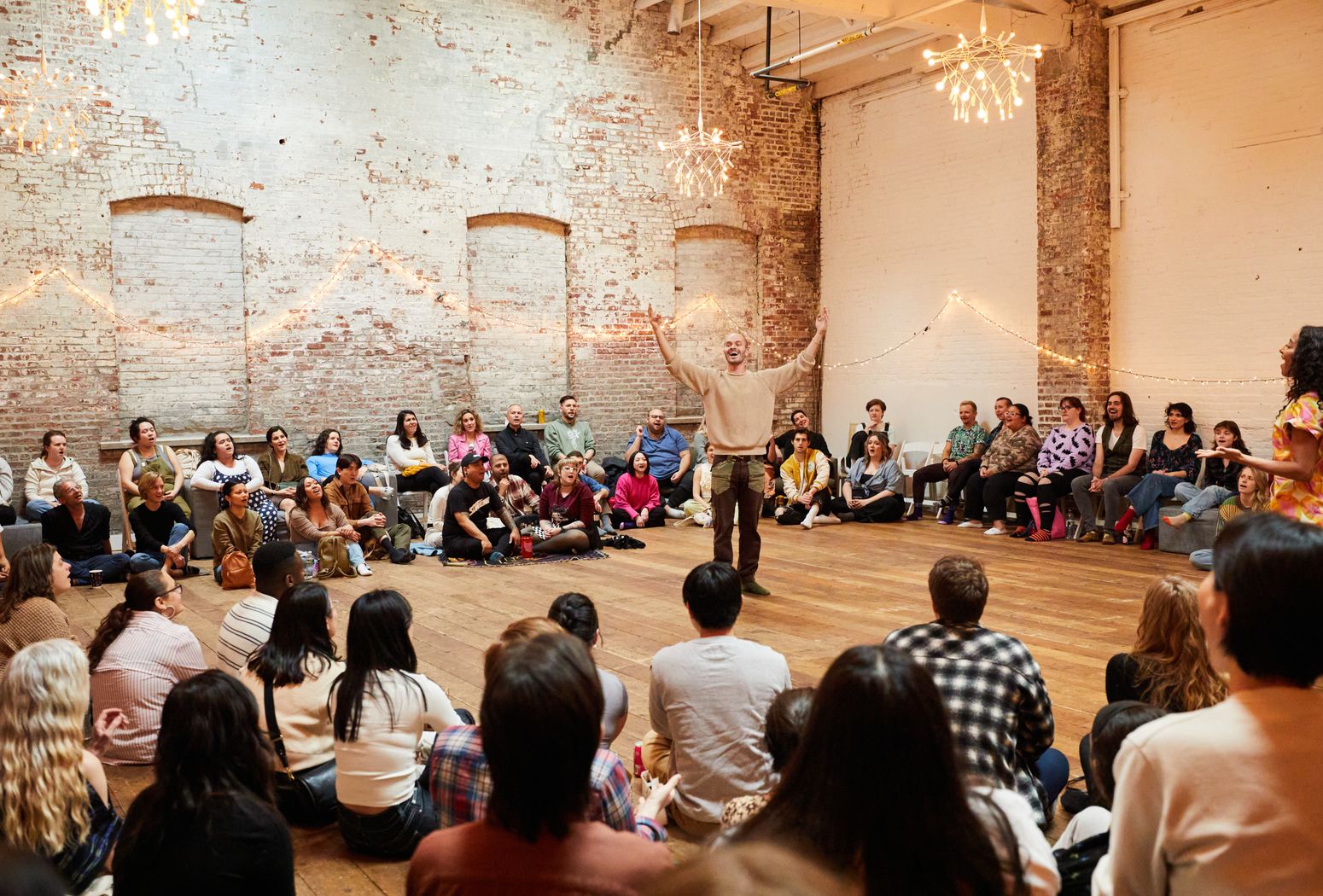
There is also a particular experience of musical belonging. Our voice can be extremely simple and yet be essential for the other layers to function.
Studies on collaborative vocal improvisation have observed experiences of play, musical learning, agency, and shared construction among participants. This doesn't make Circle Singing therapy, nor does it guarantee a specific effect for everyone. However, it does help us understand why an open and cooperative musical environment can generate experiences of attention, surprise, connection, and exploration.
A recent educational research study also examines Circle Singing as an inclusive and interdisciplinary laboratory, using repetition and collective vocal improvisation as learning tools.
Ultimately, the principle is very simple: Each voice listens, proposes, and responds to a system that is constantly changing.
Frequently Asked Questions about Circle Singing
Do I need to know how to sing?
You don't need vocal training or knowledge of music theory to get started. Being able to listen to a short phrase and try to repeat it is enough. An experienced group can work on much more complex harmonic and rhythmic structures, but the principle remains the same.
How many people are needed?
Three people can already create several layers. With six, eight, twelve, or more participants, many possibilities arise for dividing the circle into sections. The format can be adapted to small or very large groups.
What is the difference between Circle Singing and a choir?
A choir typically works with a repertoire, arrangements, or structures that have been previously defined and rehearsed. In Circle Singing, the musical material is created primarily during the experience itself. Both worlds can coexist: many choirs incorporate improvisation into their rehearsals, and there are ensembles specifically dedicated to vocal improvisation.
Can it be done with children or beginners?
Yes. In fact, short patterns, imitation, repetition, and call-response make it easy to adapt the experience. With beginners, it works especially well to limit each idea to just a few sounds and prioritize play over complexity.
And what about with advanced musicians?
Also. An experienced group can explore polyrhythms, irregular meters, modulations, improvised counterpoint, different scale systems, changes of key, extended textures, and much longer musical forms.
What does a facilitator do?
Listen to the group as a whole, suggest initial structures, and help organize the voices. You can assign patterns, introduce changes, indicate silences, create spaces for improvisation, and guide a transition. A good facilitator also knows when to step back and allow the group to respond on its own.
A voice can be small and the music enormous.
Circle Singing reminds us of a basic idea of music: A complex composition can emerge from very simple relationships..
A voice repeats.
Another listens and responds.
Someone finds a rhythm.
Another person discovers a note that fits between the previous ones.
And at some point we stop knowing exactly who is accompanying whom.
The whole circle becomes the song.
Explore your voice as a musical instrument.
At Vocal Alchemy we investigate listening, resonance, tuning, intervals, harmony and improvisation from the direct experience of singing.
Sources and readings
- Make Music Day — Circle Singing • Contemporary introduction to participatory practice.
- Pantano & Rizzo — Circle Singing as an Inclusive Interdisciplinary Practice • Educational research on collective vocal improvisation.
- Eeva Siljamäki — Free improvisation in choral settings • Research on collaborative vocal improvisation, learning, play, and social processes.
- Bobby McFerrin — Circlesongs • History and approach to his vocal improvisation practice.
- The Oxford Handbook of Community Singing • Perspectives on community singing and musical participation.
