
Posts by LEGATTO

Is it really possible to make a living from music?
Discovering your singing voice isn't about imitating anyone. Learn to listen to it, release tension, breathe better, and find your own way to express yourself through sound.
see more
The Acoustic Scale – The Mysterious Footprint of Music
Discovering your singing voice isn't about imitating anyone. Learn to listen to it, release tension, breathe better, and find your own way to express yourself through sound.
see more
How to discover your voice and free it to sing?
Discovering your singing voice isn't about imitating anyone. Learn to listen to it, release tension, breathe better, and find your own way to express yourself through sound.
see more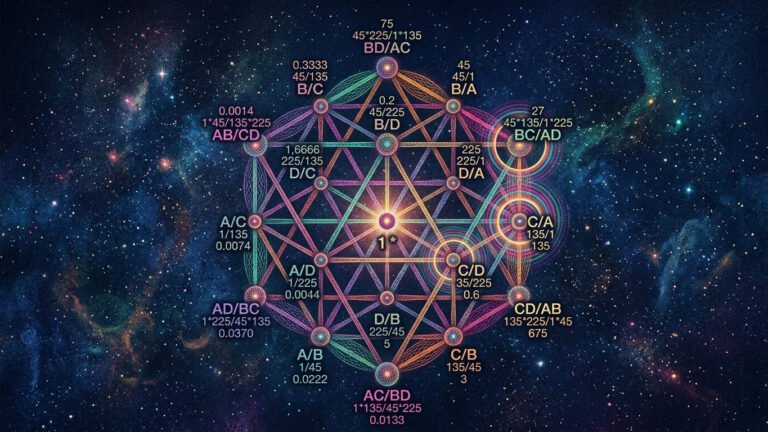
Ervin Wilson's Musical Theory: Geometry, Sound, and Recursion
Ervin M. Wilson (1928–2016) represents one of the most formidable and innovative figures in the history of music theory, physical acoustics, and microtonality. While traditional Western music theory has tended to treat tuning systems as static structures derived from historical practice, Wilson's work addressed…
see more
The Genius of Jacob Collier: The Revolution of Modern Music
Is it possible to fill a stadium and get tens of thousands of people singing four-part microtonal chords without them needing to know how to read a single note on a staff? For Jacob Collier, this isn't a laboratory experiment: it's the usual climax of his concerts. From his childhood bedroom in…
see more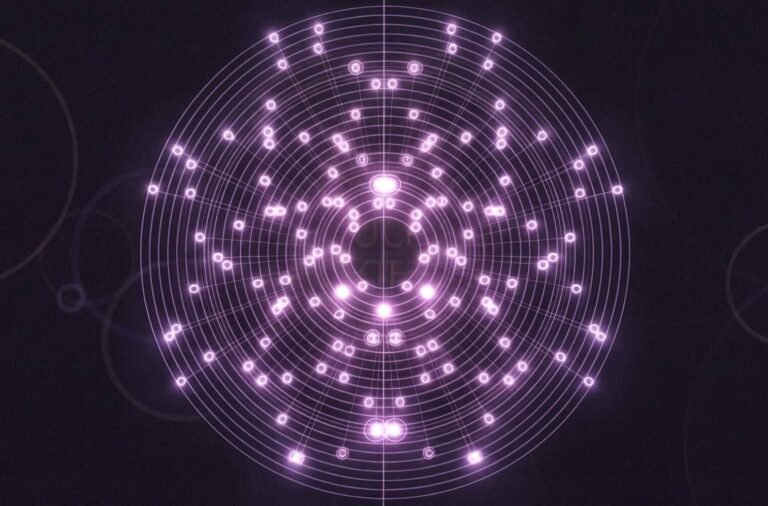
Algorithmic composition and the Lucid Rhythms case
For most people, the term "algorithmic music" conjures up one of two things: either a computer generating random, impersonal notes, or a programmer writing thousands of lines of indecipherable code on a black screen only to produce a few synthetic beeps. However, the concept of "algorithmic composition"...
see more
Musical Scales of the World: Correspondences and Cultural Dimensions
Comparative music theory reveals that the concept of scale is not merely a homogeneous mathematical abstraction, but a dynamic reflection of the aesthetic, cosmological, and liturgical philosophies of civilizations. While the post-Renaissance Western musical paradigm has prioritized the development of structures suitable for harmonic modulation and…
see more
Binaural Waves: Brain Hacking, Neuroscience and the Limit of the Placebo
Binaural beats are one of the most curious phenomena in acoustics and neuroscience: two pure tones with subtly different frequencies, presented separately to each ear, trick the brain into "hearing" a third, phantom beat. The internet abounds with almost magical promises about this phenomenon: from absolute concentration to…
see more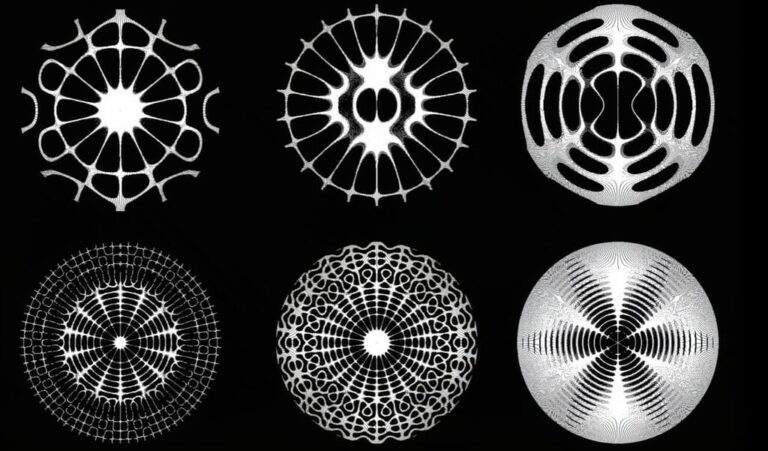
Cymatics: The Invisible Architecture of Sound
Human perception of sound is often limited to a fleeting experience: variations in air pressure that our ears translate into music, noise, or words. However, behind this sensory experience lies a physical, tangible, and deeply structured reality. What if you could see your favorite song? Welcome to the fascinating world of…
see more
Musical Scales
Understanding the architecture of music requires being able to see the relationships between frequencies and distances. This post details the fundamental components that structure our musical system, from the smallest unit to the construction of the major scale. For an immediate visual and technical reference of these structures, check out the Scales app we developed in collaboration…
see more